O-Rings

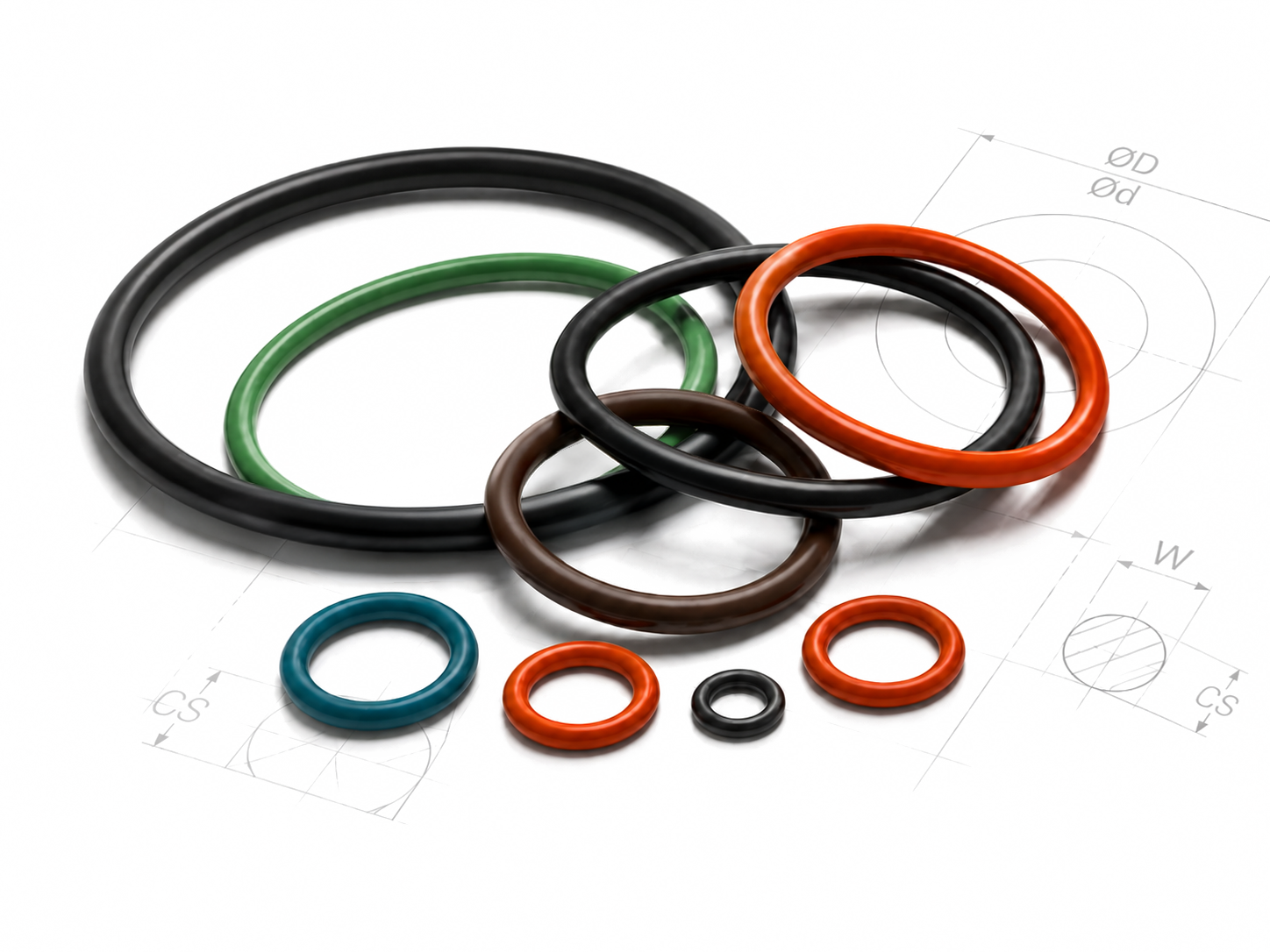
The right O-ring starts with the right material, size, and application fit.
O-rings are simple in shape, but performance depends on the right material, size, hardness, tolerance, and application fit. Niantic helps customers source, specify, and replace O-rings for industrial equipment, regulated applications, and critical sealing environments.
Standard O-Rings
O-rings for routine replacement, maintenance, and production needs.
Specialty Compounds
Material options for chemical resistance, temperature extremes, and demanding performance.
Regulated & Spec-Driven Applications
O-rings sourced to meet industry standards, specifications, and compliance requirements.
Custom & Hard-to-Find O-Rings
Identification and sourcing from samples, drawings, dimensions, or part numbers.
Find the Right O-Ring Size

Use the tool below to look up standard AS568 O-ring sizes by dash number, inside diameter, outside diameter, or cross-section.
Include the dash. Example: -010
Have a sample, photo, or worn O-ring?
Standard size charts are helpful, but used O-rings can stretch, swell, flatten, or deform. Niantic can help identify the right replacement path from your sample, photos, dimensions, drawing, equipment details, or application requirements.
- Clear photo next to a ruler or caliper
- Inside diameter, outside diameter, and cross-section
- Equipment type or part location
- Media exposure, pressure, and temperature
- Material, color, or specification if known
Send Niantic what you have. Our team can help review the application and recommend a practical replacement path.
Send O-Ring Details to NianticAS568 Size Results
Request Pricing & Availability
Your selected O-ring sizes will be included with your request.
Selected Quote Items
Measuring a Sample?
To help identify an O-ring, measure:
Inside Diameter (ID)
Outside Diameter (OD)
Cross-Section (CS)

Your Quote List 0
Your details are secure and will only be used to process your request.
Not sure which size is right?
O-ring measurements can change after use, wear, swelling, or compression.
Send Niantic your sample, dimensions, drawing, or application details and our team can help identify the right replacement path.
Find the Right O-Ring for Your Application
Explore common equipment applications where the right seal helps control leakage, protect components, and support reliable operation.
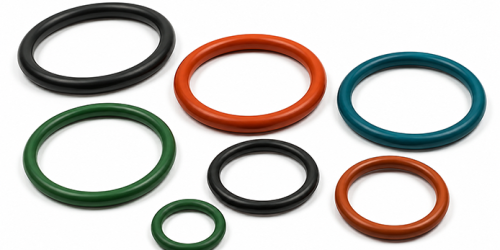
Standard Replacement O-Rings

Common sizes and materials for maintenance, repair, and production.
AS568 and metric sizes
Nitrile, EPDM, silicone, FKM, and more
Inch and metric dimensions
Stocked and sourced options
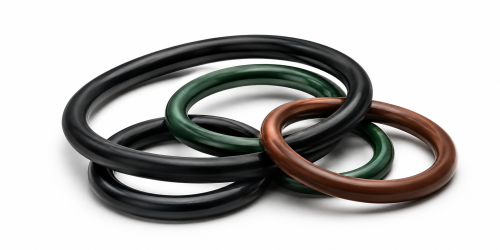
Specialty Material
O-Rings
Common sizes and materials for maintenance, repair, and production.
FKM, FFKM, PTFE, and more
High- and low-temperature options
Chemical resistant materials
Application specific guidance
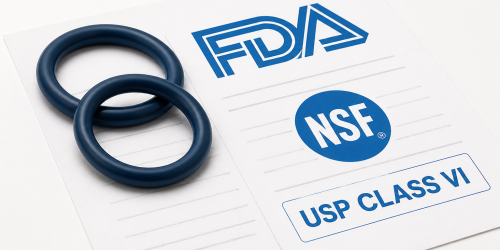
Regulated & Spec-Driven O-Rings
Materials and documentation for regulated, validated, and customer-specified applications.
FDA, USP Class VI, NSF 61, 3-A
REACH, RoHS, and PFAS documents
Lot traceability and certificates
Customer specification support
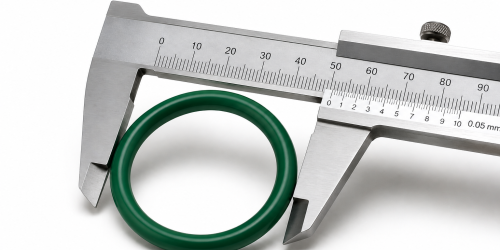
Custom & Hard-to-Find O-Rings
Materials and documentation for regulated, validated, and customer-specified applications.
Sample and dimension matching
Custom sizes and materials
Prototype through production
Domestic and global sourcing
Need help identifying the right O-ring?

Send us your part number, drawing, sample, or application details. Niantic can identify, source, or recommend an O-ring based on material, size, specification, and operating conditions.
Need help identifying the right O-ring?
Send us your part number, drawing, sample, or application details. Niantic can identify, source, or recommend an O-ring based on material, size, specification, and operating conditions.
Trusted Partners



Q&A:
O-Ring Questions Buyers Often Ask
What O-ring material is compatible with my fluid or chemical?
Material compatibility depends on the fluid or gas being sealed, concentration, temperature, pressure, exposure time, cleaning chemicals, and whether the application is static or moving. Nitrile, EPDM, silicone, FKM, FFKM, and other materials each have different strengths, and compounds within the same material family may perform differently.
Niantic can review your operating conditions, required approvals, and service expectations to help narrow the options, including standard elastomers, specialty compounds, and materials for regulated applications.
How do I figure out what size O-ring I have?
The two primary dimensions are the inside diameter and cross-section. For the best result, measure an uninstalled O-ring without stretching or compressing it, and take several measurements around the ring. Those dimensions can then be compared with AS568 or metric size standards.
Used O-rings may be stretched, flattened, swollen, or permanently deformed, so the nearest nominal size is not always the correct replacement. Niantic can compare your measurements with standard size ranges and help identify likely matches from a sample, drawing, equipment model, or part number.
How can I identify an O-ring without a part number?
An unknown O-ring can often be narrowed down using dimensions, groove measurements, equipment information, application conditions, or a physical sample. Color and appearance may provide clues, but they cannot reliably confirm the material or compound.
Niantic can help cross-reference incomplete part numbers, review samples and drawings, compare inch and metric sizes, and source standard, obsolete, or hard-to-find replacements. Definitive material identification may require supplier records or material testing.
Why is my O-ring leaking, swelling, cracking, or flattening?
Different types of damage often point to different causes. Swelling or softening may indicate chemical incompatibility. Cracking can result from heat, ozone, aging, or chemical attack. A permanently flattened seal may have compression set, while cuts, nibbling, or extrusion can indicate excessive pressure, clearance, installation damage, or an incorrect hardness.
The failed seal should be evaluated together with the temperature, pressure, media, groove design, motion, and installation method. Niantic can review the seal’s condition, current specification, and operating details to help identify likely causes and practical replacement options.
Can I replace an O-ring with the same size in a different material?
Not automatically. O-rings with identical dimensions may perform very differently because of hardness, chemical resistance, temperature limits, compression set, friction, and resistance to extrusion. A different material may also swell or shrink differently in the same fluid, changing the seal’s fit and performance.
Niantic can compare material options against the actual operating environment and help determine whether a direct substitution is practical or whether the gland, hardness, or seal design should also be reviewed.
What is the difference between AS568 and metric O-ring sizes?
AS568 defines a standardized series of inch-based O-ring sizes identified by dash numbers. Metric O-rings are commonly produced to ISO and other metric dimensional standards. Some inch and metric sizes appear nearly identical, but small differences in inside diameter or cross-section can affect squeeze, stretch, and sealing performance.
Niantic supplies both inch and metric sizes and can help cross-reference an existing seal before a substitution is made. When measurements fall between sizes, the gland dimensions and operating conditions may also need to be considered.
Can I get a standard size o-ring or do I need a custom size?
A standard size is usually preferred because it can reduce cost, shorten lead time, and simplify future replacement. A custom O-ring may be needed when no standard size fits the gland, the equipment is obsolete, the diameter is unusually large, or the application requires a specific cross-section size, compound, hardness, or tolerance.
Niantic can compare your requirements against available standard sizes first, then help source custom sizes and compounds when necessary. Support can begin with a drawing, sample, groove dimensions, equipment information, or an existing part number.
Can I get O-rings with FDA, USP Class VI, NSF, or other documentation?
Documentation is tied to the exact compound, manufacturer, and product, not simply to the general material type. Depending on the application, available records may include statements supporting applicable FDA requirements, USP Class VI test documentation, NSF/ANSI/CAN 61 certification, documentation supporting applicable 3-A requirements, REACH or RoHS declarations, PFAS statements, lot traceability, and certificates of conformance.
Niantic can help identify compounds that align with your requirements, confirm available supplier documentation, and coordinate records for regulated, validated, and customer-specified applications. Niantic can also support labeling, kitting, custom packaging, and recurring supply programs when documentation must remain tied to specific lots or assemblies.
Speak with a Dedicated Niantic Representative
Niantic has developed an extensive product offering through partnerships with industry leading manufacturers. With extensive experience in the industry, count on us to meet your needs while improving your facility’s operation and efficiency.